Participant Stories
Participant Stories
The Difference Between a Want and a Need When Leaving Prison
Coming home from prison is supposed to be a fresh start, but for many parents, it begins with a harsh reality: there’s no money to support their children from day one. That gap – between wanting to show up as a parent and not having the resources to do it – can shape everything that follows.
Read the story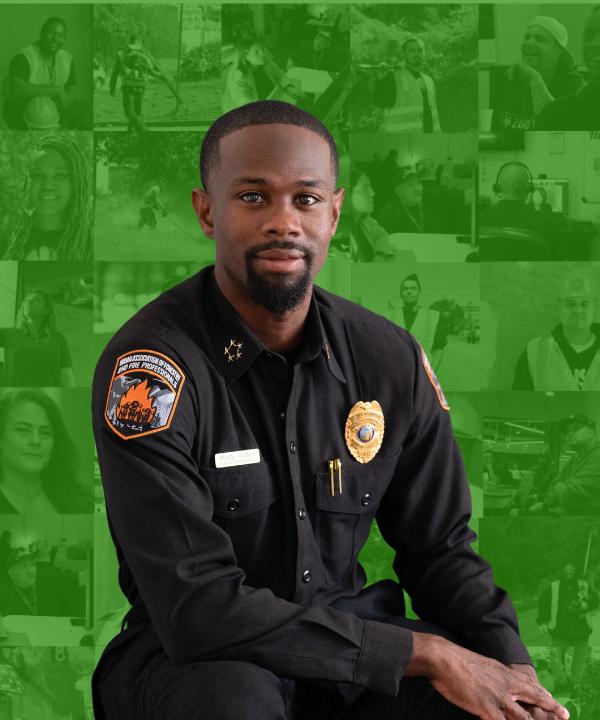
Participant Stories
Building the Firefighting Workforce of Tomorrow: Royal Ramey’s Journey from CEO Participant to FFRP Founder
After returning home from incarceration, Royal had struggled to find work. He connected with CSRI, which referred him to CEO’s transitional work crew. At the same time, he took fire technology classes and courses through Victor Valley College, completed fire academy training on weekends, and prepared for a career in the fire service.
Read the story
Participant Stories
How Jeramie Turned Hard Lessons Into a New Mission
At 48, Jeramie has spent much of his life overcoming obstacles. Today, he is doing more than rebuilding his own future. He is helping others navigate the same challenges he once faced. Raised in Santa Rosa, California, Jeramie describes an unstable upbringing. Through it all, one constant remained: the close bond he shared with his brother. Still, like many young people searching for direction, he fell into destructive cycles. Between the ages of 16 and 20, he was incarcerated in the California Youth Authority.
Read the story
Participant Stories
From Toy Cars to CDL Credentials: How Anqua Led by Example for His Children
Anqua describes growing up in Detroit, Michigan, as the oldest of three siblings. He remembers watching his single mother work constantly to provide, getting the family where they needed to go, mostly by public transportation. Sometimes, they had access to personal vehicles. It is no understatement to say that his mother’s tenacity was his greatest inspiration.
Read the story
Participant Stories
Back-to-School is also Back-to-Fatherhood for Ward
At 53, Ward is enrolled in trucking school and attending classes five days a week as he prepares for a career behind the wheel. This moment has been shaped by hard lessons, persistence, and the love he has for his kids. Now, one year after coming home and after a road filled with obstacles, Ward is ready to put the past in his rearview mirror.
Read the story
Participant Stories
Fernando Found the Strategy First, Then Built the Career
Fernando spent his early childhood in the Dallas, Texas, area before moving to California around the sixth grade. He remembers growing up with his brother in a happy home, raised by a mother who always managed to keep a roof over their heads.
Read the story
Participant Stories
Leading by Example: How Talasha’s Journey Back to School Inspired Her Children
Talking to Talasha, one of the first things she shares is how proud she is of her children. She glows when talking about her daughter, a high school student who earns straight A’s and performs as a majorette in the school band, as well as her 17-year-old son, who is actively pursuing his own goals and finding his path forward. Today, she is focused on rebuilding a stable foundation for her family and setting her sights on a future in corporate leadership.
Read the story
Participant Stories
How Administrative Delays Impact Reentry in New York
Coming home on October 1, 2024, I knew that reentering society would be a job in itself. I had all my paperwork ready and followed every rule I was supposed to follow. Yet, despite calling and following up constantly, I didn't receive benefits until mid-December. That two-and-a-half-month wait was a stark reminder of how hard this path would be. Programs like Medicaid are essential to people like me who cannot afford healthcare in an economy where basic medical costs are dangerously high.
Read the story
Participant Stories
Parenting Without a Safety Net: Jose’s Story
According to the Sentencing Project, nearly half of the 1.9 million incarcerated people in America are parents. This means that when someone is released, it’s not just a personal milestone – it’s a family reunion that requires immediate stability. For fathers like Jose, coming home means facing the responsibility of supporting children right away, with no savings, no cushion, and no time to wait for help.
Read the story
Participant Stories
More Than Medicine: Anthony’s Fight for Health Coverage Post-Release
For many people leaving incarceration, health coverage is not just a benefit – it is a lifeline. Without it, accessing mental health care, medication, and the stability needed to rebuild a life becomes nearly impossible. For Anthony, Medi-Cal made all the difference.
Read the story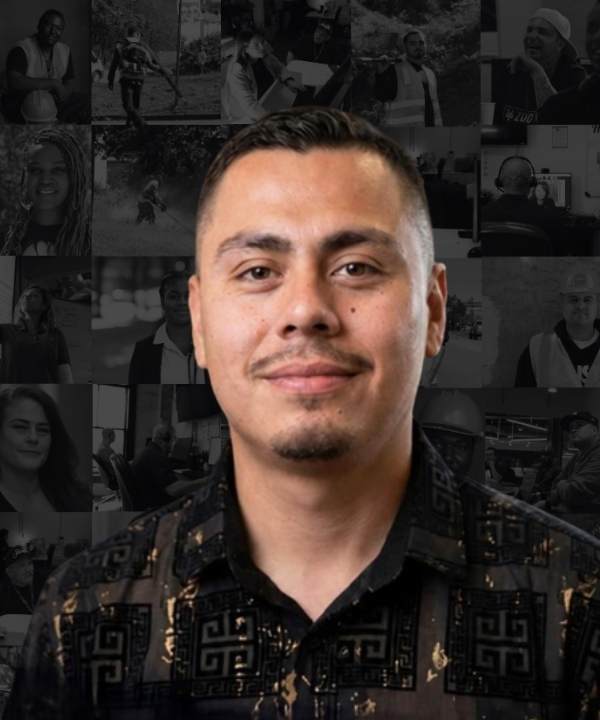
Participant Stories
Locked Out Before the Door Opens: The Real Cost of Healthcare Mandates
The transition back to society isn't a single step; it is a grueling, daily trek up a steep mountain. For me, that climb has been defined by a system that feels designed to watch me slide backward, rather than help me reach the top.
Read the story
Participant Stories
Julio’s Turnaround: If One Door Shuts, Another Opens
Julio was raised in a Mid-City-Koreatown neighborhood in Los Angeles as one of six children in a hardworking family. Despite the gang violence in the surrounding streets, his parents taught their children to stay focused on their education and goals. They provided for all six of them without reliance on government assistance, stretching out every paycheck. Even through the agony of incarceration, Julio kept his eyes fixed on the hope his parents gave him, driven by his dream to “take care of them the way they took care of us.”
Read the story