Medicaid is one of the most powerful — yet most underutilized — tools in successful reentry. We're working to ensure it becomes a core pillar of America's reentry infrastructure.
Across the country, Medicaid provides nearly 80 million Americans with essential access to physical, mental, and behavioral health services. Research links Medicaid enrollment with improvements to individual health and employment outcomes, as well as increased community health and public safety.
Every year, 600,000 people return home from incarceration. Many are eligible for Medicaid but never enroll due to administrative barriers and lack of support.
However, due to upcoming changes to the Medicaid program, in most states many Medicaid beneficiaries will have to meet new work requirements or risk losing their health coverage.
For justice-impacted people, losing Medicaid means:
- Gaps in critical healthcare services and medications
- Barriers to work and income stability
- Increased risk of reincarceration
- Higher long-term healthcare costs for families, states, and communities

The Challenge Ahead
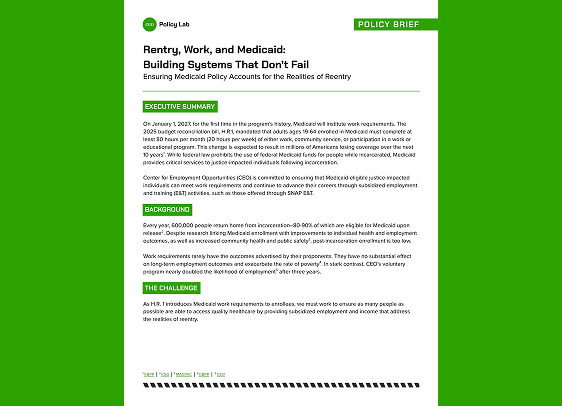
The 2025 Budget Reconciliation Bill (H.R.1) establishes Medicaid community engagement work requirements for the first time in history.
Across the country, Medicaid provides nearly 80 million Americans with essential access to physical, mental, and behavioral health services. Research links Medicaid enrollment with improvements to individual health and employment outcomes, as well as increased community health and public safety.
Without system changes to ensure that justice-impacted individuals have job opportunities, researchers warn that many will be unable to meet Medicaid work requirements, resulting in widespread coverage losses -- and potentially long-term consequences including:

Increased Instability

Rising Unemployment

Higher Recidivism Rates

Public Health and Safety Concerns
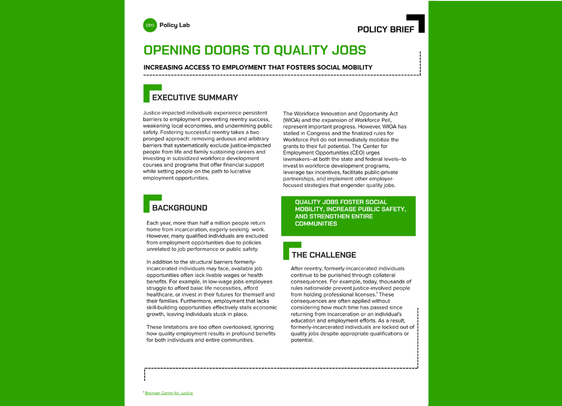
Think Pieces
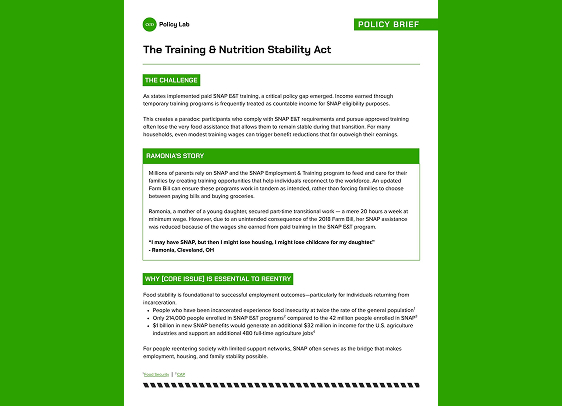
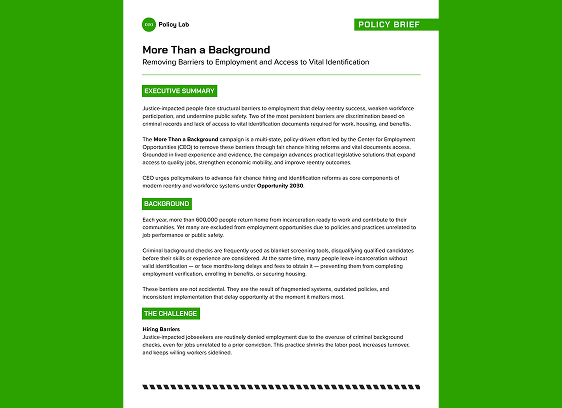
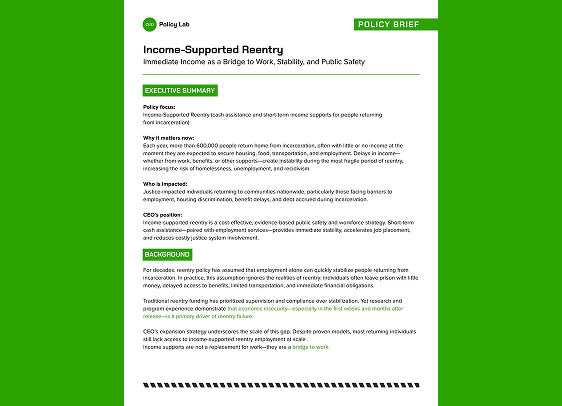
Policy Briefs
.png)
.png)
Policy Priorities
Integration
Aligning and integrating SNAP (food assistance), TANF (temporary cash assistance and employment supports for families), and Medicaid work requirements to create smooth, automatic processes that help people meet community engagement requirements while maintaining access to healthcare.

Simplification
Developing simplified state-level processes for determining, tracking, and reporting work requirement exemptions (e.g., for individuals who are medically frail).
Requirements
Ensuring flexible, taxable stipends are counted as minimum monthly income to exempt people from work requirements.

Extension
Extending exemption periods for people being released from incarceration from 3 to 12 months.
Support
Investing in employment supports for Medicaid beneficiaries (workforce programs, coaching, training, and more).

A Vision for What's Possible
With the right systems in place, Medicaid can:


Safety
Reduce recidivism and improve public safety

Employment
Improve employment outcomes and earnings


Stability
Strengthen housing and family stability

Savings
Lower state and federal spending long-term

Help Build a Reentry Infrastructure
The Works for Everyone
Philanthropy, policymakers, advocates, and partners all have a role in ensuring Medicaid becomes a catalyst for fair-chance opportunity.