Author: T.M. Gray
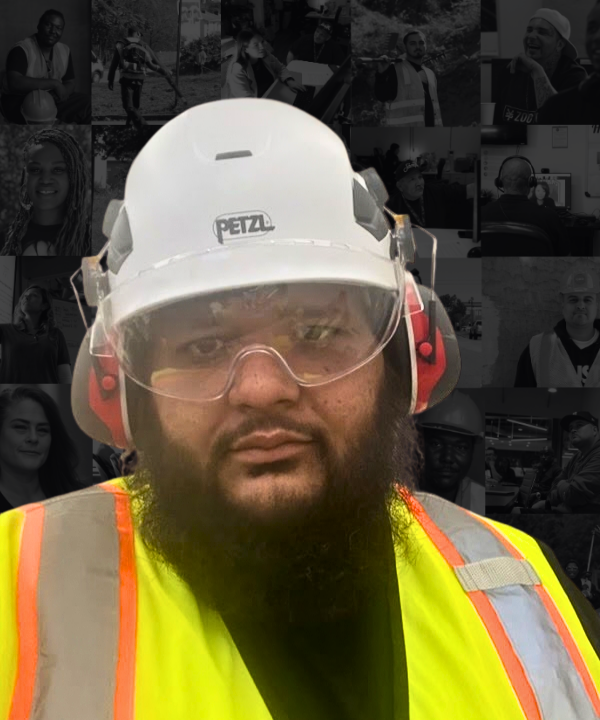
Fernando spent his early childhood in the Dallas, Texas, area before moving to California around the sixth grade. He remembers growing up with his brother in a happy home, raised by a mother who always managed to keep a roof over their heads.
There was just one caveat: Fernando was a kid who always needed to be active, and sometimes that energy led him down unproductive paths.
“I always have to be doing something,” he says. Sometimes that “something” got him into trouble. He was kicked out of school more than once and describes himself as a troublemaker.
As an older brother, Fernando tried to turn his mistakes into lessons for others. His younger brother looked up to him, and even as Fernando got into trouble, he urged him not to follow in his footsteps.
“I knew I was doing wrong at the time,” he says, “but it’s not something that I wanted for my family.”
Eventually, school troubles led to involvement with the criminal justice system. While incarcerated, Fernando made the best of his time by seeking guidance from long-term inmates who had researched reentry programs, ranging from housing to employment and training, to help peers prepare for release.
Fernando paid attention.
“I just let it all sink in,” he says. “When I got out, I put my plan to action.”
When Fernando returned home, he was determined to do things differently.
“I’m too old to be doing this,” he remembers thinking.
But he and his family were initially reunited without stable housing, staying together in a vehicle. Fernando began reaching out to the programs he had learned about while incarcerated.
He describes what happened next as a series of blessings.
The first was the Anti-Recidivism Coalition, or ARC. Through a seven-week program, Fernando learned about skilled trades and unions, including boilermakers and ironworkers. He had known those careers existed; now he was learning how to access them.
His second blessing was Lighthouse, a program Fernando says helped his family move from their vehicle into a furnished home and covered approximately a year of rent.
Then came the blessing he had hoped for prior to his release—connecting with the Center for Employment Opportunities (CEO) in Inland Empire, California through his parole officer.
Through CEO, Fernando began working transitional jobs with daily pay while pursuing permanent employment. He was interested in the possibilities of public-sector employment and a career path he could continue building.
Within two days of starting, based on his performance on the work crew, Fernando was connected with an interview at Caltrans.
There was just one problem: he didn’t have the money to get there.
Fernando says that although the staff at CEO barely knew him, they were more than willing to help. As a new participant asking for assistance, he was touched by how quickly the staff were willing to take a chance on him.
CEO provided a gas card so he could make the trip.
“Here you go, man,” Fernando remembers being told. “Go get it.”
Fernando got the job.
Today, he works for Caltrans, performing hands-on work similar to the experience he gained through CEO. More importantly, Fernando sees the position as far more than just a paycheck.
“This is not just a job,” he says. “This is a career.”
At the time of his interview, that career still required sacrifice. Fernando was commuting roughly three hours between his home in Crestline and his work location. Fernando was already applying for a Caltrans position closer to home.
This time, a CEO site supervisor served as one of his professional references. Fernando had worked with CEO long enough for staff to see the work ethic he had promised them on day one.
In a relatively short period, Fernando says his family went from living in a vehicle to having a home, two vehicles and a career capable of providing long-term stability.
His experience has also left him with a message for people preparing to come home from incarceration: learn what resources exist and use them.
“You can’t expect somebody to hand something to you,” he says. “You really gotta go out there and get it.”
Fernando had people on the inside tell him where to look. Once released, he followed through—seeking help with housing, learning about career opportunities, working and continuing to apply.
His advice now is simple.
“Keep applying.”
He also credits his faith with changing what he believes is possible. Fernando says there was a time when he did not expect himself to succeed. His life today looks considerably different.
“It shows that God is real,” he says. “Anything can happen.”
For someone else wondering whether their own circumstances can change, Fernando offers the lesson he learned firsthand:
“You can change your life from bad to great. All you gotta do is try.”
Stay connected—sign up for our newsletter to learn how CEO supports justice-impacted individuals through career building, advocacy, and policy change. Check out more stories on our blog or donate to support economic mobility.
